Object-Oriented Programming (OOP) is a paradigm that revolutionized software development by introducing a modular and organized approach to writing code. It has become one of the most widely used programming paradigms, fostering code reuse, scalability, and maintainability. In this article, we will delve into the key principles and concepts of Object-Oriented Programming, its benefits, and its application in real-world scenarios.
Object-oriented programming is a way of developing software applications using real-world terminologies to create entities (classes) that interact with one another using objects
Key Principles of Object-Oriented Programming:
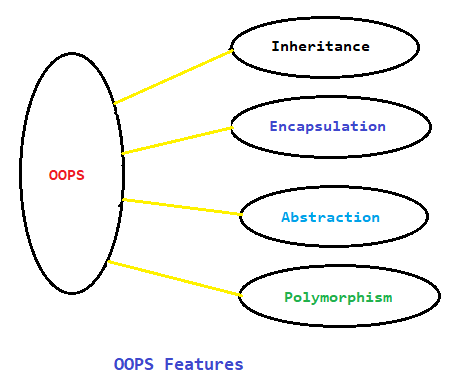
Encapsulation: Encapsulation is the bundling of data and methods that operate on the data into a single unit known as a class. This unit acts as a protective barrier, preventing the direct access to the internal details of the object. Users interact with objects through well-defined interfaces, promoting a more secure and manageable codebase.
Inheritance: Inheritance is a mechanism that allows a class to inherit the properties and behaviors of another class. This promotes code reuse, as common functionalities can be defined in a base class and extended or overridden in derived classes. Inheritance establishes an "is-a" relationship, enhancing the organization and structure of code.
Polymorphism: Polymorphism enables objects of different types to be treated as objects of a common type. This can be achieved through method overloading and method overriding. Method overloading involves defining multiple methods with the same name but different parameters, while method overriding allows a derived class to provide a specific implementation of a method defined in its base class.
Abstraction Abstraction is a fundamental concept in Object-Oriented Programming (OOP) that plays a crucial role in simplifying and managing complex systems. It involves the process of hiding the unnecessary details of an object while exposing only the relevant and essential features. Through abstraction, developers can focus on the high-level functionalities of objects without getting bogged down by the intricacies of their internal implementations.
Benefits of Object-Oriented Programming:
Code Reusability: OOP promotes the reuse of code through encapsulation and inheritance. Once a class is defined, it can be reused in various parts of the program, reducing redundancy and making maintenance more straightforward.
Modularity: By organizing code into classes and objects, OOP allows developers to create modular and scalable applications. Each class can be developed and tested independently, leading to a more manageable codebase.
Maintenance and Flexibility: OOP facilitates code maintenance and updates. Changes can be made to a specific class or module without affecting the entire program. This makes it easier to adapt to evolving requirements and enhances the system's flexibility.
Enhanced Collaboration: OOP encourages collaboration among developers as they can work on different classes or modules simultaneously. The well-defined interfaces between objects allow for parallel development without interfering with each other's work..
Real-World Applications of Object-Oriented Programming:
Software Development: OOP is extensively used in software development for creating applications, frameworks, and libraries. Popular programming languages like Java, C++, and Python rely heavily on OOP principles.
Game Development: Object-Oriented Programming is widely employed in the gaming industry. Game objects, characters, and environments are often represented as classes, making it easier to manage complex interactions within the game.
Web Development: Frameworks such as Ruby on Rails and Django leverage OOP to provide a structured and modular approach to building web applications. Objects can represent entities like users, products, or transactions.
Database Systems: OOP concepts are applied in the design and implementation of database systems. Objects map to entities in the database schema, and their interactions are modeled through classes and relationships.
Conclusion: Object-Oriented Programming has become a cornerstone of modern software development, fostering code organization, reusability, and maintainability. By adhering to principles such as encapsulation, inheritance, and polymorphism, developers can create robust and scalable applications across various domains. As technology continues to advance, OOP remains a powerful and relevant paradigm, shaping the way we approach software design and development.



Georgia Reader Reply
The explanation of encapsulation, inheritance, and polymorphism is particularly well-articulated, making it accessible to both beginners and experienced developers.